
High-Dose, Customizable Platelet-Rich Plasma
High-Dose, Customizable Platelet-Rich Plasma
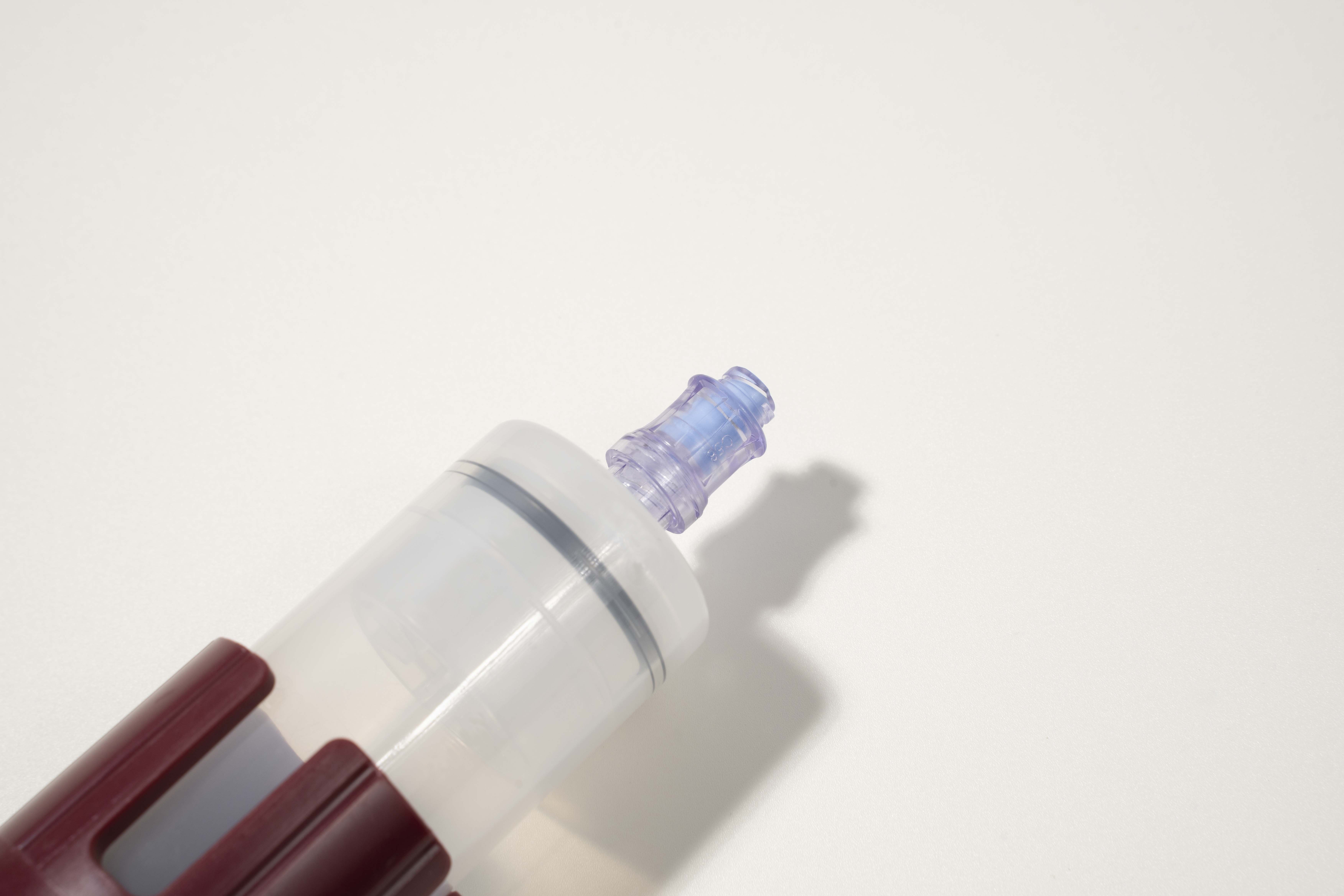
Studies now identify 10 billion platelets as the benchmark for clinically relevant improvement in pain and function.
Using a proprietary concave collection surface, the Cervos KeyPRP system is engineered to maximize platelet recovery while giving physicians full control over final composition.
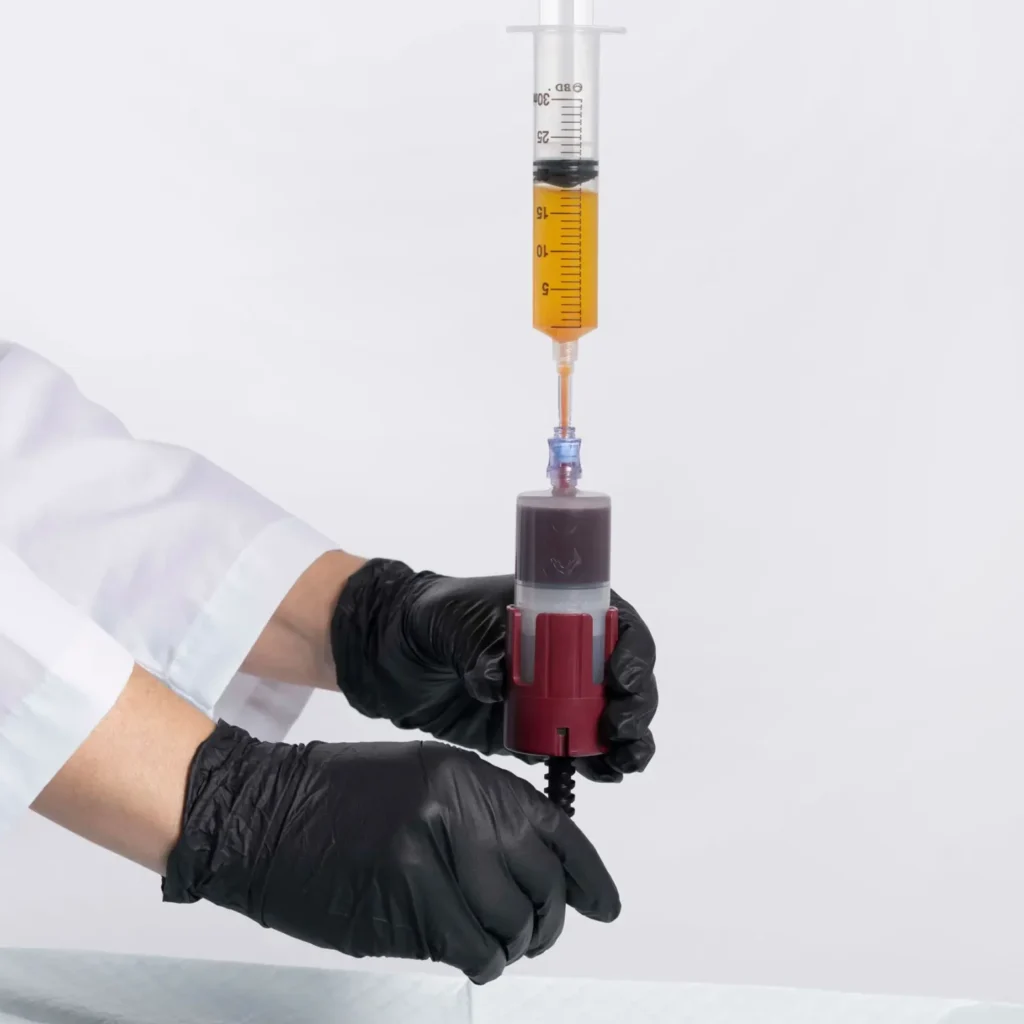
The screw-based decantation method gives the physician granular command over volume and hematocrit — no guessing, no waste, no extra equipment.
Concentrate down to 1.5 cc when you need a dense dose, or pull a larger volume for broader delivery. The same closed system adapts to the call.
Can be tailored to fit physician preference, application and patient need.
| Volume PRP | Platelets | Lymphocytes | Monocytes & Granulocytes |
|---|---|---|---|
| 10 mL | 8× | 8× | 0.3× |
| 5 mL | 16× | 15× | 0.6× |
| 2 mL | 31× | 31× | 1.2× |
| Volume PRP | Platelets | Lymphocytes | Monocytes | Neutrophils |
|---|---|---|---|---|
| 10 mL | 8× | 8× | 5× | 1× |
| 5 mL | 16× | 15× | 10× | 2× |
| 2 mL | 31× | 31× | 20× | 4× |
Kyriakides, C. (2022). Platelet Rich Plasma (PRP) / Platelet Concentration (PC) Systems: Preparation Processing Protocols. NYU Grossman School of Medicine, Department of Rehabilitation Medicine.
Maximize chemotactic effect by ensuring highly concentrated platelet dosages with volume reduction to as low as 1.5 cc.
A proprietary collection surface ensures maximum platelet capture, while the screw-based decantation method provides complete control over hematocrit levels.
A closed system built on validated dual-spin AABB protocols, mitigating biological contamination risk and reducing patient safety hazards.
Find Your Configuration
Pick your primary application and we'll point you to the configurations that fit.
Configurations that fit
| Product # | Catalog Code | Product Name |
|---|---|---|
| 76112-01M | CER-PRP-80 | 80cc Kit w/ BD & ACD-A |
| 76148-01M | CER-PRP-TRIPLE-A | 80cc Bulk System w/ ACD-A |
| 76137-01M | CER-PRP-TRIPLE-B | 80cc Bulk System |
| 76116-01M | CER-PRP-40 | 40cc Kit w/ BD & ACD-A |
| 76126-01M | CER-PRP-DOUBLE-B | 40cc Bulk System |
| 76148-01M | CER-PRP-SINGLE-A | Single Spin w / ACD-A |
High-dose platelet-rich plasma refers to PRP preparations engineered to deliver clinically meaningful platelet quantities — typically at or above the 10 billion platelet benchmark identified in recent peer-reviewed literature as associated with more consistent outcomes. Single-spin and low-volume systems often deliver only 1–3 billion platelets per dose. High-dose systems use validated dual-spin protocols and optimized collection geometry to recover and concentrate platelets up to 30x over baseline whole-blood concentration.
Sources
Recent clinical research has identified approximately 10 billion platelets as a threshold above which PRP studies have shown more consistent improvement in pain and function scores. Doses below ~5.5 billion platelets have shown inconsistent results across published studies, while doses meeting or exceeding the 10 billion benchmark have demonstrated sustained outcomes at one-year follow-up in the literature. The KeyPRP™ system is engineered to consistently deliver platelet quantities in this range.
Sources
The difference is composition. Leukocyte-poor PRP minimizes white blood cells — particularly granulocytes — resulting in leukocyte content typically below baseline whole-blood levels. Leukocyte-rich PRP retains a higher concentration of leukocytes, generally several times above baseline. The choice between leukocyte-poor and leukocyte-rich preparation is made by the treating physician based on the patient and the specific procedure or application. KeyPRP™ allows either preparation from a single closed system.
Sources
Double-spin PRP systems generally yield significantly higher platelet concentrations than single-spin systems. Single-spin protocols are faster but typically deliver concentrations of 2–5x over baseline. Double-spin protocols, like the AABB-aligned process used in KeyPRP™, recover more platelets and allow volume reduction down to 1.5 cc, achieving concentrations up to 30x over baseline. The trade-off is a slightly longer preparation step.
Sources
Platelet-rich plasma has been studied across a range of orthobiologic and aesthetic applications. In orthopedic and sports medicine, peer-reviewed research includes studies in knee osteoarthritis, tendinopathies, and soft-tissue applications. In aesthetics and dermatology, PRP has been studied in hair restoration and facial protocols. Decisions about clinical use are made by the treating physician based on the patient, the procedure, and the published evidence relevant to the specific application.
Sources
Get product updates, clinical evidence, and event news from Cervos Medical.


